Honor–Shame Culture in the Bible (From Creation to Second Temple Israel)
Dust rises from an ancient path. A shepherd greets a traveler at the city gate; elders lift their eyes to weigh the newcomer’s name. In this world, honor—public reputation, dignity, standing—opens doors. Shame closes them. A good name binds families, secures marriages, and protects livelihoods. Disgrace isolates like a desert night.
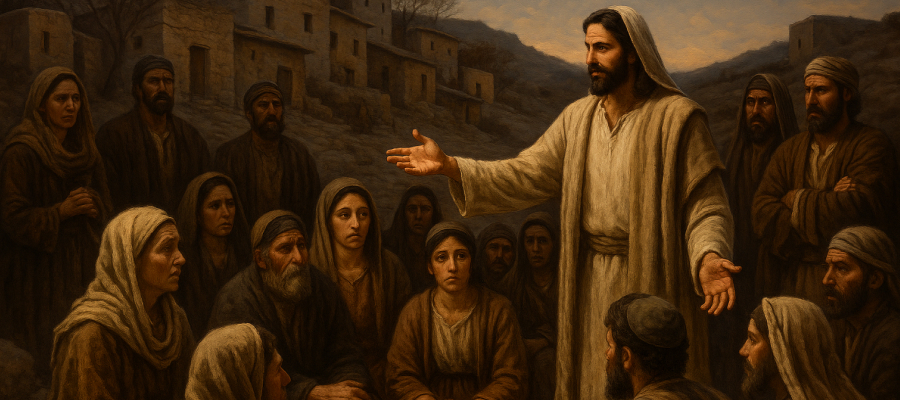
To step into Israel’s story is to step into a society where identity was communal and worth was measured in public. Scripture was written for us, but not to us. If we read the Bible through modern Western lenses—privatized, individual, purely internal—we flatten its meaning. We miss the currents that carried Abraham’s family, Israel’s kings, the prophets, and the crowds who gathered to hear a Rabbi on a Galilean hillside.
This article traces honor–shame from creation to the Second Temple period—focused on Israel and the Jewish people—so we can hear Scripture as its first readers did.
Creation: Innocence Without Shame, Then Hiding in the Trees
The Bible’s first portrait of human life is strikingly social: “The man and his wife were both naked and were not ashamed.” (Gen 2:25) Innocence is pictured not as private bliss but as unbroken dignity—nothing to hide before God or one another.
When trust is broken, shame enters. Adam and Eve cover themselves and hide from the voice that once walked with them in the garden (Gen 3). In Hebrew imagination, shame triggers concealment; we cover what has been exposed, avert our faces, withdraw from belonging. From the start, Scripture frames sin as more than legal guilt: it disfigures honor and fractures community. God’s movement in response is just as telling: garments for the naked, presence returning to the fearful, a promise that shame will not have the last word.
Patriarchs: Family Honor, Barrenness, Birthrights, and Reversal
Abraham and Sarah: Reproach Removed
God honors Abram with a covenant name and future: a great people. Yet the path runs through barrenness, a deep shame in the ancient world where a woman’s fruitfulness protected the family’s future. Sarah’s anguish is not merely personal pain; it is public reproach. Her attempt to build a family through Hagar seeks to recover honor within a household watching and whispering. When Isaac is born, Sarah’s laughter is relief from disgrace—“God has taken away my shame.” (cf. Gen 30:23)
Jacob and Esau: Firstborn Honor
In patriarchal households, the birthright—double inheritance and future leadership—was a prized honor. Esau despises it; Jacob grasps it. Later, Jacob secures the blessing, and Esau’s cry is the cry of lost status. In this world, a squandered honor was nearly irrevocable—the community recalibrated around the new bearer of the name.
Reuben: Dishonor and Disinheritance
Jacob’s firstborn forfeits his standing through a shameful act (Gen 35:22). The birthright shifts to Joseph’s line. Honor here is not an inner feeling but family position, future role, and public regard—lost or gained by deeds that the whole clan cannot ignore.
Joseph: From Disgrace to Glory
Joseph’s robe—the visible sign of favor—is ripped away. He is sold, slandered, and imprisoned. But the God who lifts the lowly exalts him, placing him at Pharaoh’s right hand. Joseph’s arc is the Bible’s recurring pattern: shame reversed, honor restored, not as a trophy but as a calling to preserve life.
Exodus to Settlement: YHWH’s Honor Among the Nations
Egypt boasts, Israel groans, and the God of Abraham acts so that His name will be known. The plagues are not only judgments; they are honor contests—Who is God? Whose word stands? Israel’s sea crossing publicly vindicates the enslaved; Egypt’s chariots sink under the weight of false glory. Miriam’s song celebrates the God whose right hand wins honor without boasting.
In the wilderness, Israel’s grumbling is not just impatience—it questions God’s reputation. Manna and water become sacraments of trust: will the people treat God’s provision as honorable, or will they shame His name with ingratitude? By Sinai, Israel receives a vocation: bear My name, do not lift it up in vain. Holiness is public.
Settling the land turns again on honor and shame—faithfulness brings kavod (glory/weight), idolatry leads to defeats that disgrace Israel before the nations. The Book of Judges reads like a cycle of public humiliation and God’s restoring honor through unlikely deliverers.
Kings and Warfare: The Field of Honor
The monarchy brings honor to center stage. Goliath taunts—an honor challenge. David answers in the name of the Lord, and Israel’s shame lifts as the giant falls. Songs of women—“Saul has slain his thousands, David his tens of thousands”—reshuffle the honor ledger.
International relations are conducted in the currency of dignity. When Hanun mutilates David’s envoys—half-beards shorn, garments cut—he doesn’t just insult individuals; he shames Israel. War follows, not as caprice but as the expected work of restoring national honor.
Within the palace, honor is fragile: Saul chooses suicide rather than public degradation by Philistines; Absalom seizes his father’s concubines to usurp royal honor in the most visible way. David himself vigilantly distances his reign from treachery, mourning enemies in public to preserve the name of his kingship.
Psalms & Wisdom: Kavod (Glory) and Busha (Shame)
The Psalms teach us to pray within this world of public dignity:
“Do not let me be put to shame, O LORD.” “You lift my head.” “You have crowned him with glory and honor.”
Kavod (glory/weight) is felt, seen, recognized. Busha (shame) bends the head, thins the voice, isolates the sufferer. Wisdom literature urges integrity not only to avoid punishment but to guard the family name, to be a person whose reputation can be trusted at the gate.
Prophets: Shame as Judgment, Honor as Promise
When Israel breaks covenant, the prophets describe the scandal in honor–shame terms: unfaithful wife, exposed nakedness, name profaned among the nations. Exile is public disgrace; the temple’s fall is Ichabod—“the glory has departed.”
Yet the prophets also promise a reversal: “Instead of your shame, you shall have double honor.” (Isa 61:7) “All who rage against you shall be ashamed and disgraced.” (Isa 41:11) God will vindicate His people and sanctify His name. The Servant will endure shame without turning His face away, and God will exalt Him—honor won not by humiliating others, but by bearing our disgrace and covering it with glory. The pattern is set: God humbles the proud and lifts the lowly.
Exile & Return: Repairing the Name
By the waters of Babylon, Israel tastes communal humiliation. Their loss tarnishes not only their identity but, in the eyes of the nations, God’s reputation. The return under Persian edicts becomes a work of restored honor—rebuilding walls, renewing Torah, cleansing worship. Ezra tears his garment in public grief; Nehemiah faces mockers and rallies the people to defend the name of Jerusalem. The community relearns life ordered around God’s kavod.
Second Temple Daily Life: Honor as Social Currency
Walk the narrow streets of Second Temple towns and you can feel the rules of reputation. In a world of limited resources and tight communities, honor is scarce and precious. It is both ascribed (by birth, lineage, gender) and acquired (by piety, generosity, courage). Without a good name you are, socially speaking, bankrupt—doors to trade, marriage, and leadership close.
Family First
Your primary allegiance is to family and kin. Children learn that choices bring honor or dishonor to parents. Marriages are crafted to enhance household standing. A woman’s honor is tied to sexual faithfulness and modesty; a man’s to provision and protection.
Public Scripts of Honor
- Banquets: Guests angle for places of honor (cf. Luke 14:7–10). Seating charts are moral maps.
- Giving: Benefactors trumpet alms to gain honor; Jesus will later redirect this, urging secret charity so that honor flows to God, not the giver.
- Purity: Lepers, bleeders, and those marked “sinners” carry public stigma—kept at a distance to protect communal dignity.
- Challenge–Riposte: Public debates function like honor contests; a sharp answer can shame opponents or win a crowd.
- Genealogies: Names and places confer instant status or suspicion (can anything good come from Nazareth?).
The Weight of Exclusion
To be put out of the synagogue is not an inconvenience—it is social death. This is why Jesus touching lepers, eating with tax collectors, and lifting fallen women is so scandalous and so healing: He is removing shame and restoring honor before God and the community.
Rabbinic Threads: Not Shaming, Sanctifying the Name
Early rabbinic teaching intensifies two streams:
- Do not shame: Public humiliation is likened to bloodshed. To embarrass a neighbor is to attack their life. Communities are built on honor given, not just honor guarded.
- Kiddush HaShem / Chillul HaShem: A Jew’s conduct can sanctify or desecrate God’s Name. Personal actions become a public witness—for honor or disgrace—of the Holy One before the nations.
This is Israel’s vocation distilled: to bear God’s name with weight, so that His honor is seen in a people’s life.
Echoes Today: Does Honor–Shame Still Operate?
Modern Jewish life carries both Western legal frameworks and ancient social instincts. The language of kavod (honor) and busha (shame) remains common in Hebrew; families still speak of bringing honor to parents or avoiding disgrace. In traditional communities—Sephardi/Mizrahi neighborhoods, ultra‑Orthodox enclaves, close‑knit towns—reputation shapes marriage prospects, business trust, and communal standing.
Nationally, conversations about deterrence and dignity often carry honor logic: to appear weak invites harm; to act uprightly brings respect. On the positive side, everyday acts of courage and mercy are celebrated as kiddush HaShem—sanctifying the Name before the world.
Why This Lens Changes How We Read the Bible
- Narratives sharpen: Ruth’s quiet loyalty builds a name; Nabal’s insult nearly triggers blood; Hannah’s prayer is a cry to have reproach removed.
- Laws deepen: Commands about slander, false witness, weights and measures protect communal dignity; the Ten Commandments guard God’s reputation among the nations.
- Worship widens: Psalms of vindication are not petty—they plead for public restoration so the world will honor God.
- Hope intensifies: Prophetic promises of double honor are not metaphors for feelings—they are public vindications of a people and their God.
Reflection
- Where do you see honor and shame driving choices in Scripture you’ve read before?
- Whose dignity could you protect this week by your words or silence?
- What practices (almsgiving in secret, truthful speech, making amends) might restore honor in your relationships?
✨ SHEMA Lesson: Hear • Believe • Obey
- Hear: In Israel’s world, honor and shame ordered life. God’s story is the rescue of a shamed people into a name-bearing people.
- Believe: In every generation, God lifts the lowly and covers disgrace. His promises aim at public restoration, not private sentiment only.
- Obey: Guard another’s dignity. Refuse gossip. Return lost honor where you can. Live so that God’s name is honored through yours.
Keep Walking
- Want to trace this thread through specific passages? Explore our other Why Jewish Context articles on the blog.
- The SHEMA Bible App is being built to help you see these patterns—in Hebrew words, cultural practices, and literary designs. Join the waitlist to walk in the Rabbi’s dust as soon as it’s ready.