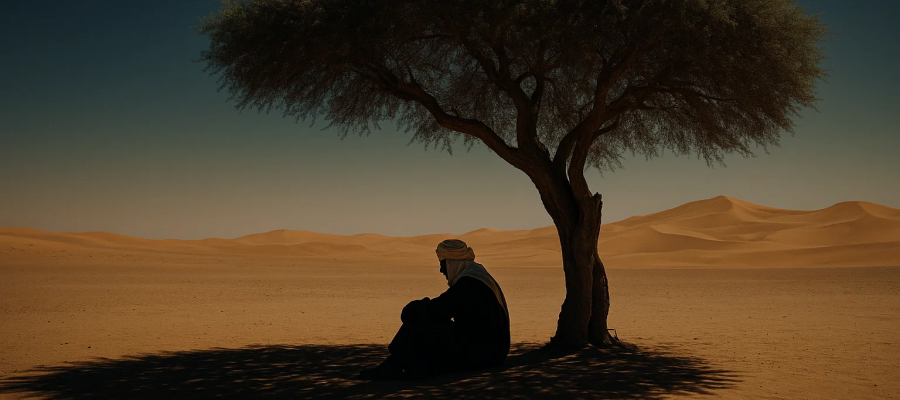
Abraham Planted a Tamarisk Tree: Covenant, Memory, and Future Hope
At first glance, Genesis 21:33 feels like a passing detail:
Genesis 21:33 “Abraham planted a tamarisk tree in Beersheba, and there he called on the name of the LORD, the Everlasting God.”
Why mention the tree at all? To many modern Western readers, it reads like scenery—Abraham needed shade, or it was simply the custom. We might not even notice what kind of tree it was; tamarisk or oak, it wouldn’t seem to matter.
But in Abraham’s world, the choice was deliberate. Planting a tamarisk was not decoration. It was covenantal. It was a signpost of memory, a testimony of God’s faithfulness, and a gift planted for the generations to come.
Western Misconception in Relatable Terms
In Western culture, planting a tree is usually symbolic but optional — a kind gesture for the environment, or perhaps a memorial for a loved one. It’s meaningful, but not binding. We rarely connect it with covenant or sacred commitment.
So when we read that Abraham planted a tamarisk tree, it’s easy to skim past as a lifestyle detail or a bit of scenery. But in Abraham’s world, that tree was theology in the soil — a living sign of faith, covenant, and hope for the future.
Jewish / Biblical Frame: What a Tamarisk Tree Signaled
For Abraham and his descendants, a tamarisk tree meant much more:
- Tamarisk trees are desert survivors. They sink deep roots, grow slowly, and live for centuries. Planting one was a statement of long-term trust, not immediate gain.
- A covenant marker. Just as Abraham built altars to mark encounters with God, this tree was a living monument — a signpost of the Everlasting God’s promise.
- Shade and hospitality. Tamarisks grow wide canopies, offering rest in a barren land. Planting one was a way of saying: “Here, in this place, strangers and descendants alike will find shade under the faithfulness of God.”
A slow-growing desert tree, planted not for oneself but for the generations to come — a symbol of trust in the Everlasting God.
So when Abraham planted a tamarisk tree and called on the name of the Everlasting God, he was declaring: The God who promised is the God who provides, and His faithfulness will shade my descendants long after I am gone.
Other Scriptures That Align
The image of trees runs deep across the Scriptures:
- Oaks of Mamre (Genesis 13:18). Abraham built an altar by great trees — covenant landmarks.
- Joshua 24:26. A covenant renewal was sealed by setting up a stone under a great tree near the sanctuary.
- Psalm 1:3. The righteous are “like a tree planted by streams of water.”
- Isaiah 61:3. God’s people are called “oaks of righteousness, a planting of the LORD.”
- John 15:5. Jesus: “I am the vine; you are the branches.” Covenant imagery of life rooted in Him.
Each tree is more than wood and leaves — it is covenant imagery, rooting faith in God’s enduring presence.
Rabbinic Parallels
Rabbinic tradition often treated trees as spiritual symbols:
- Midrash Rabbah (Genesis 21:33). Some rabbis say Abraham planted not only a tree but an eshel — interpreted as an inn, a place of hospitality under the branches. Abraham’s tree became a center of blessing for travelers.
- Pirkei Avot 3:17. “Without sustenance, there is no Torah; without Torah, there is no sustenance.” The planting of trees was often tied to spiritual nourishment and future provision.
- Talmud, Ta’anit 23a (Honi the Circle Maker). A story of a man planting a carob tree, knowing it would not bear fruit for seventy years — planting as faith for generations to come.
Together, these traditions highlight planting as an act of covenant faith, generosity, and future hope.
Big Idea
Abraham’s tamarisk tree was more than wood in the ground. It was covenant made visible: a slow, enduring witness to the Everlasting God. In what is or look like a barren land, Abraham planted for the future — and so can we.
Reflection
Genesis doesn’t waste details. Abraham’s tree is not scenery; it is a sermon. It teaches us that covenant faith is not about instant returns. It is about planting what we may never fully see, trusting the Everlasting God to bring fruit in His time.
- What “trees” are you planting today — choices, investments, acts of kindness — that may not bear fruit until long after you are gone?
- How can you trust the Everlasting God to make them a shelter of faithfulness for others?
✨ SHEMA Lesson: Hear • Believe • Obey
-
Hear: Abraham’s tree was not background scenery. It was covenant in the soil, a living witness to God’s everlasting faithfulness.
-
Believe: God is still the Everlasting One. What you plant in faith—acts of obedience, seeds of trust—He will shade and sustain beyond your lifetime.
-
Obey: Plant something today you may never sit under. Live, give, and serve in ways that outlast you, so others find shelter in the faithfulness of God.
Keep Walking
- Want to learn more? We invite you to explore our blog page to deepen your understanding of the Bible in its original context.
- Explore how the SHEMA Bible App helps you trace word pictures, remez, and hidden threads across Scripture. Join the waitlist