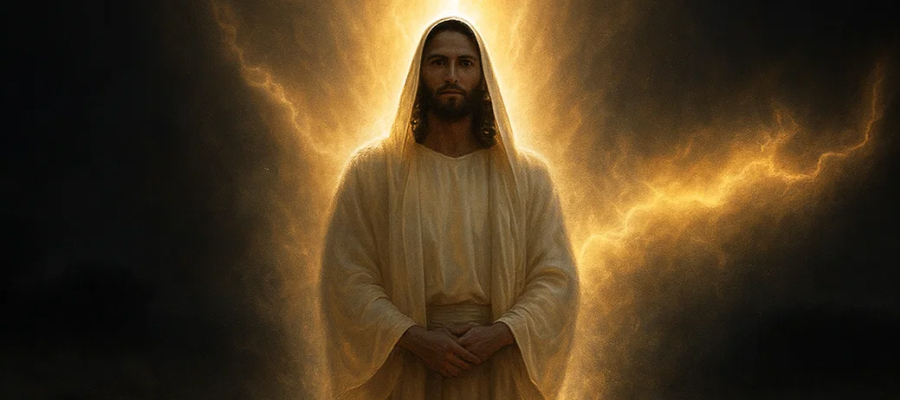
The Light of the World: Jesus and Hanukkah
Western Misconception
When Western readers hear “light of the world,” they often reduce it to a personal metaphor: light equals inner peace, positive vibes, or moral clarity. In modern life, light is everywhere. We flip a switch and entire rooms glow. Our cities never sleep because electricity keeps streets lit 24/7. The Western imagination thinks of light as convenient, controllable, and always available.
But in the first century, light was fragile, scarce, and deeply symbolic. Imagine life without Target or Home Depot to grab a new bulb. No cars with headlights. No paved highways lined with lamps. People lived in villages where the desert night swallowed the horizon, and oil lamps were precious. Food was limited, survival was fragile, and darkness was a daily reality.
By placing Jesus’ words back into that world, we discover their explosive meaning. He was not offering an inspirational slogan. He was making a bold claim rooted in Jewish tradition, Scripture, and the Feast of Dedication — Hanukkah.
Scripture in Focus
“Again Jesus spoke to them, saying, ‘I am the light of the world. Whoever follows me will not walk in darkness, but will have the light of life.’” — John 8:12
The Gospel of John records this statement during the Festival of Lights (Hanukkah). This matters. The context is not random.
- In English, “light” sounds simple. But in Hebrew and Aramaic, words like ’or (אור, light) carried layers: creation light, Torah as light, God’s presence shining in the Temple.
- Some idioms cannot be directly moved into Greek or English. For example, “walking in darkness” was not just about doing the wrong things secretly— it meant living outside God’s covenant wisdom.
Darkness = chaos, exile, ignorance of God’s ways.
Historical Context
The statement was spoken in Jerusalem during the late Second Temple period. The city was under Roman occupation, and festivals carried both religious devotion and political tension.
- Hanukkah celebrated God’s victory during the Maccabean revolt (2nd century BCE). The menorah in the Temple burned miraculously for eight days with limited oil.
- The Temple was not just a religious building. It was the heartbeat of Jewish identity, faith, and resistance.
- Light, therefore, was not only physical — it symbolized God’s faithful presence, guiding His people through oppression.
Without this context, Jesus’ words lose their edge. In the middle of a festival celebrating God as the source of light, Jesus declared: “I am the light.”
Cultural & Rabbinic Context
In Jewish teaching, light symbolized Torah. Proverbs 6:23 says, “For the commandment is a lamp and the Torah is light.” The rabbis often linked God’s word with illumination: guiding feet, dispelling ignorance, bringing order from chaos.
Hanukkah added another layer. The lighting of lamps became a public act of remembering God’s deliverance. Every household could shine light to proclaim: God still saves us.
- Rabbinic writings (Mishnah, Shabbat 2:6) debated how many lamps to light each night of Hanukkah — one ascending each day (Hillel) or descending (Shammai).
- These debates show how deeply symbolic light had become: it represented hope, covenant loyalty, and public witness.
Think of it: in a world without electricity, one little flame drew every eye in the darkness. The family menorah was never mere decoration — it was a testimony of God’s deliverance, recalling the Hanukkah miracle. Its light proclaimed publicly that God still saves us. For Jewish households, those lamps shone as symbols of hope, covenant loyalty, and communal witness — a powerful declaration of faith and remembrance of God’s role in Israel’s story.
Linguistic & Literary Insights
Jesus’ claim fits John’s larger literary design. The Gospel of John is filled with dualities: light/darkness, life/death, truth/falsehood.
- John 1 opens: “In him was life, and the life was the light of men.”
- John 3 contrasts those who love darkness versus those who walk in the light.
- In John 9, Jesus heals a blind man, showing what it means to move from darkness to sight.
Scriptural Parallels
Jesus’ words echo Israel’s Scriptures:
- Isaiah 9:2: “The people walking in darkness have seen a great light.”
- Psalm 27:1: “The Lord is my light and my salvation.”
- Proverbs 6:23: “The commandment is a lamp and the Torah is light.”
- Exodus 13:21: God led Israel by a pillar of fire.
Theological Depth (Eastern vs Western)
Western Christianity often hears this statement as private comfort: Jesus gives me light when I feel dark inside. True, but incomplete.
In Jewish-Eastern thought:
- Light is covenantal and communal. It guides an entire people, not just individuals.
- Light is active: it exposes injustice, reveals truth, and calls for obedience.
- Light connects heaven and earth. Temple menorahs echoed the cosmic order of creation itself.
Light connects heaven and earth.
In Jewish imagination, the menorah in the Temple was not just a lamp but a miniature cosmos. Its design, commanded in Exodus 25, was shaped like a tree — branches, buds, blossoms — recalling the Tree of Life in Eden. The seven flames corresponded to the seven days of creation, a perpetual reminder that all life and light flow from the Creator. Rabbinic tradition saw the menorah as a bridge: its earthly light in the Temple mirrored the heavenly light of God’s glory. By tending its flames, priests enacted a cosmic drama — keeping creation’s order alive, joining heaven’s brilliance to Israel’s worship on earth.
So when Jesus declared, “I am the light of the world,” He was placing Himself in that role: not just giving comfort to individuals but embodying the Creator’s light that sustains the world, the same light the Temple menorah symbolized from the beginning.
Big Idea
Jesus’ statement was more than inspiration — it was a bold Hanukkah claim of identity. He was declaring that He Himself embodied the presence of God, the wisdom of Torah, and the saving power that guided Israel through history.
Reflection
Pause for a moment. Where do you look for light today? Electricity, screens, and cities give us the illusion that darkness is gone. Yet spiritual darkness remains real: injustice, confusion, fear, and self-reliance. Have we replaced the true Light of the World with man-made light? Do we distract ourselves with artificial brightness instead of turning to Him — to the light of His Word, where His truth still pierces the darkness and guides our steps?
✨ SHEMA Lesson: Hear • Believe • Obey
- Hear: Jesus, during Hanukkah, declared that He is the Light of the World, fulfilling Israel’s Scriptures and symbols.
- Believe: This means He is not just inspiration but the living presence of God guiding His people through His word.
- Obey: Walk in His light today by letting His teaching expose darkness in your life and illuminate your path. Do this by going directly to Scripture — read the Bible yourself so God can speak to you firsthand, not through hearsay or secondhand opinions.
Keep Walking
- Want to learn more? We invite you to explore our blog page to deepen your understanding of the Bible in its original context.
- Explore how the SHEMA Bible App helps you trace word pictures, remez, and hidden threads across Scripture. Join the waitlist