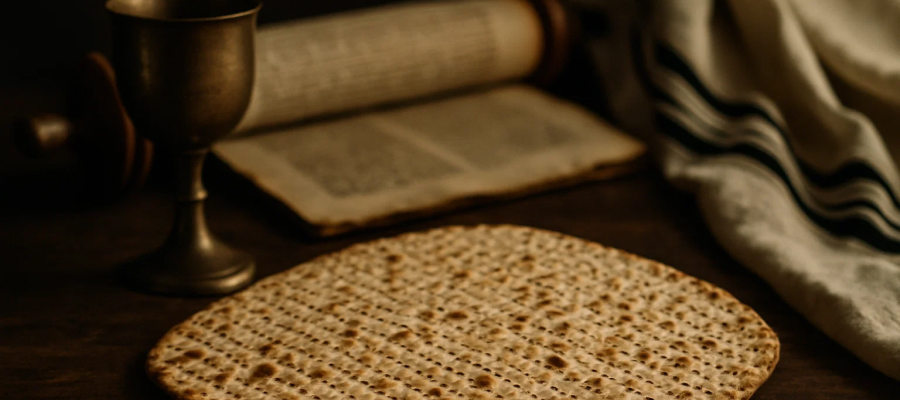
The Bread of Life: Jesus in the Jewish Context of Daily Bread
When most of us in the West think of bread, it feels ordinary. Something cheap in the grocery store aisle. A dinner roll at a restaurant. A filler to hold a sandwich together. Many even avoid it — bread becomes the first item cut in a diet. We live with endless choices: supermarkets full of snacks, meats, salads, and packaged foods. Bread blends into the background. Disposable. Forgettable.
But in the first-century Jewish world, bread was not optional. Bread was life itself. To run out of bread was to run out of life. Every meal began with it. Every home centered around it. Bread was covenantal, sacred, a daily reminder that survival depended on the God who gives food to the hungry. To speak of bread was to speak of God’s faithfulness.
And so when Jesus stood in Galilee and declared:
John 6:35 “I am the bread of life. Whoever comes to me shall not hunger, and whoever believes in me shall never thirst.”
His words landed with a weight we often miss. To His Jewish listeners, this was not a poetic metaphor. It was a bold claim to embody God’s provision, God’s presence, and God’s covenant care.
A Western Misunderstanding
Imagine you’re sitting in an American chain restaurant. Before your meal arrives, a basket of bread hits the table. People nibble on it while they wait for what they consider the “real food.” That is how most Westerners subconsciously think of bread: filler. Something extra. Not essential.
Now step back two thousand years. Picture a dusty village in Galilee. No supermarkets. No restaurants. No pizza delivery. For a family, survival depended on the daily rhythm of grinding grain, kneading dough, baking loaves. Bread was not filler. It was the meal itself. Without it, the family starved.
That contrast alone explains why modern readers often shrink Jesus’ words into metaphor. We miss the gravity of His claim because our relationship with bread has changed. We treat bread as optional. They treated bread as survival.
Scripture in Focus
To understand Jesus’ claim, we need to sit with the text itself.
John 6:31–35 “Our fathers ate the manna in the wilderness; as it is written, ‘He gave them bread from heaven to eat.’ Jesus then said to them, ‘Truly, truly, I say to you, it was not Moses who gave you the bread from heaven, but my Father gives you the true bread from heaven. For the bread of God is he who comes down from heaven and gives life to the world.’ They said to him, ‘Sir, give us this bread always.’ Jesus said to them, ‘I am the bread of life; whoever comes to me shall not hunger, and whoever believes in me shall never thirst.’”
Notice how the conversation begins with Israel’s memory of manna — bread from heaven. Jesus redirects: Moses was not the true giver. The Father Himself now gives bread, not as flakes in the wilderness, but as a person. Bread now walks, speaks, and offers eternal sustenance.
Hebrew word for bread, but also tied to covenant and life. To share bread was to share relationship.
Historical Context
Bread shaped the rhythm of Jewish life. In every village, families ground grain with stone tools, mixed flour with water, and baked over clay ovens. Children grew up with the smell of baking bread filling the air each morning.
Bethlehem itself means Beit Lechem — “House of Bread.” To Western ears, that sounds poetic. To ancient Jews, it sounded practical, like saying “the bakery.” The Messiah’s birthplace already whispered His identity: the Bread of Life would be born in the House of Bread.
Even the Temple carried this imagery. Twelve loaves of the Lechem Panim — the Bread of the Presence — sat continually before God. These loaves were a symbol of His covenant dwelling among His people.
Bread, then, was never background. It was covenant history, Temple practice, and survival itself.
Cultural & Rabbinic Insights
Rabbinic literature reinforces this view:
- Talmud, Berakhot 35a: “Without bread, there is no Torah; without Torah, there is no bread.” Life was physical and spiritual together — never separated.
- Pirkei Avot 3:21: “If there is no flour, there is no Torah; if there is no Torah, there is no flour.”
- Midrash on Psalm 23:5: God’s table is Torah itself, the bread that nourishes the soul.
For the sages, studying Torah was like eating bread. Both sustained life.
This means Jesus’ claim to be the Bread of Life echoed deeply. He was not replacing bread or Torah but embodying them. To hear Him was to eat.
Linguistic & Literary Insights
Hebrew words often carry pictures. Lechem (bread) comes from the same root as milchamah (battle). Both involve struggle. Bread does not appear without labor. You grind, knead, and bake. Life with God is not effortless — it requires faithful perseverance.
Jesus’ claim also works as remez (hint). By calling Himself bread, He triggers memories of Exodus manna, Temple bread, and the blessing said at every Jewish meal:
“Blessed are You, Lord our God, King of the universe, who brings forth bread from the earth.”
He ties Himself to that prayer. He is the Bread brought forth from the earth — and, through resurrection, the Bread brought forth from the grave.
Scriptural Parallels
Bread is a golden thread through Scripture:
- Exodus 16 → Manna as God’s daily provision.
- Deuteronomy 8:3 → “Man shall not live by bread alone, but by every word from the mouth of the LORD.”
- Psalm 78:24 → Manna called “bread from heaven.”
- Leviticus 24:5–9 → Bread of the Presence in the Temple.
- Luke 24:30–31 → Emmaus disciples recognize Jesus in the breaking of bread.
- John 6 → Jesus as the fulfillment of all bread imagery.
Bread in Scripture is more than food. It is God’s chosen picture of presence, provision, and covenant.
Theological Depth: Eastern vs Western
In much of Western Christianity, Jesus’ claim can sound like a promise of personal ease: “If I come to Him, my struggles will vanish and my needs will always be met.” His words become centered on our benefit—bread as comfort or provision for me.
But Jewish ears in the first century heard something weightier. Bread was not only food—it was covenant, Temple presence, manna in the wilderness, the blessing spoken at every meal. To call Himself the Bread of Life was to say: I am God’s faithful provision. I am the presence you bless at the table. I am the manna that sustained your fathers. I am the very bread set before the Lord in the Temple.
The distinction matters. One lens reduces Jesus’ words to a metaphor for my needs; the other hears incarnation—the God who fed Israel now takes flesh as bread Himself, for the life of the world.
Big Idea
Bread in the Bible is never ordinary. It is covenant, presence, and provision. When Jesus says, “I am the Bread of Life,” He declares Himself to be God’s living provision — born in Bethlehem, revealed at every table, and sustaining His people forever.
Reflection
- What if every time you saw bread, you thanked God for His presence?
- Could a loaf on your table remind you of the Bread of Life who sustains you at this very moment?
Bread is not only food — it is a teacher. It whispers of dependence, covenant, and daily faith. To break bread is to remember the One who was broken for us.
✨ SHEMA Lesson: Hear • Believe • Obey
-
Hear: Jesus calls Himself the Bread of Life, tying Himself to manna, Temple bread, and covenant blessing.
-
Believe: Jesus is not only the one who gives bread—He Himself is the Bread. Believe that He is your provision. Come to Him in His Word, and dwell in His presence. He calls you to live in His nearness—tangible, real, sustaining.
-
Obey: Each time you see bread, pause to thank Him and remember His presence. He is with you.
Keep Walking
- Want to learn more? We invite you to explore our blog page to deepen your understanding of the Bible in its original context.
- Explore how the SHEMA Bible App helps you trace word pictures, remez, and hidden threads across Scripture. Join the waitlist